
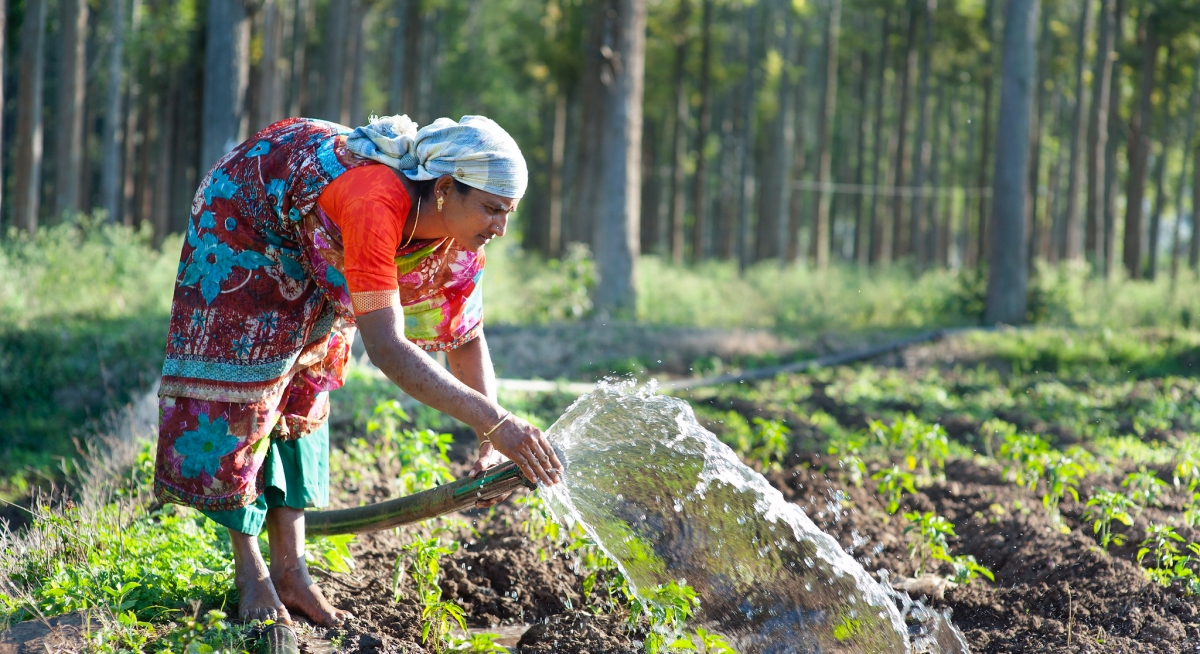
“The True Essence of Organic India”
Introduction: A Seed Planted in the Past
India’s relationship with the earth has never been transactional.
For centuries, our farmers saw soil as sacred, crops as blessings, and cultivation as prayer. The concept of organic farming isn’t a Western import — it’s a revival of what India always practiced before the chemical age arrived in the mid-20th century.
In recent decades, however, a quiet revolution has been sprouting. From Sikkim — the world’s first fully organic state — to Maharashtra, Telangana, and Tamil Nadu, a growing community of farmers is returning to the natural methods of agriculture that once made India self-sufficient and spiritually rich.
The movement is more than just farming; it’s a reclamation of truth, health, and harmony.
The Modern Crisis: When Soil Became a Factory
The Green Revolution of the 1960s gave India food security but left behind a trail of soil fatigue, groundwater depletion, and chemical dependency. Fertilizers and pesticides, though effective in yield, stripped the land of its biodiversity and made farmers vulnerable to corporate inputs.
Today, India faces a paradox: we produce enough food to feed the nation, but our soil is dying, our rivers are polluted, and our people are falling sick.
The answer isn’t more chemicals — it’s consciousness.
Organic India: A Return to Wisdom
Organic farming isn’t about nostalgia; it’s about necessity. The principles of organic cultivation — using compost, bio-fertilizers, and natural pest repellents — work in alignment with the ecosystem rather than against it.
The result?
-
Healthier soil that regenerates with every crop cycle
-
Reduced dependency on external inputs
-
Stronger rural economies driven by trust and transparency
Farmers who switch to organic methods often report a 30–40% reduction in input costs and improved soil fertility within two years.
The Science Behind Sustainability
Organic farming restores the microbial life of the soil — the invisible world that actually grows our food. These microbes fix nitrogen, break down organic matter, and retain moisture naturally.
In contrast, chemical farming destroys this balance. Every chemical spray kills more than pests — it kills the living intelligence of the soil itself.
Organic India’s movement therefore isn’t anti-technology; it’s pro-balance — using science to understand nature rather than overpower it.
Natural Farming: India’s Own Revolution
Inspired by visionaries like Subhash Palekar (Zero Budget Natural Farming) and Masanobu Fukuoka (Natural Farming), India’s farmers are finding financial freedom in sustainability.
Zero Budget Natural Farming (ZBNF) eliminates external inputs entirely.
Farmers rely on Jeevamrutha (cow dung & urine-based bio-culture), mulching, and crop diversity to regenerate their land.
And it’s working.
In Andhra Pradesh alone, more than 6 lakh farmers have adopted natural farming practices — saving costs, improving yields, and restoring groundwater levels.
The Consumer Awakening
The shift isn’t happening in fields alone — it’s happening on dining tables. Urban consumers are now actively choosing organic food for its purity and nutritional value.
The Indian organic food market has crossed ₹12,000 crore and is growing by 25% annually. From organic honey and millets to chemical-free cosmetics, demand is driving a silent revolution across retail and e-commerce.
Brands like Tatsat Bharat represent this new wave — connecting local producers with mindful consumers, ensuring authenticity at every step.
Challenges in the Field
Despite the enthusiasm, the organic movement still faces serious roadblocks:
-
Lack of uniform certification standards
-
Limited market access for small farmers
-
Price sensitivity among consumers
-
Counterfeit “organic” labeling
Solving these issues requires cooperation among government bodies, NGOs, and private enterprises. Digital platforms and blockchain-based traceability systems are already emerging as solutions to restore trust in the organic label.
The Future of Organic India
The future of Indian agriculture will not be a return to the past — it will be a fusion of tradition and technology.
Imagine AI-powered drones monitoring pest patterns while farmers use cow-based compost. Or digital marketplaces directly connecting organic producers to urban buyers.
Organic India’s next decade will belong to those who can combine ethics with efficiency — those who understand that food is not a commodity but a covenant with the planet.
Tatsat Bharat’s Vision: Purity, Prosperity, Progress
At Tatsat Bharat, we believe that the true essence of India lies in its soil — rich, resilient, and regenerative. Our mission is to empower small farmers and sustainable brands through marketing, storytelling, and direct consumer engagement.
We stand for:
Transparency — Every product tells its origin story.
Sustainability — Every brand we support respects the earth.
Trust — Every transaction strengthens local livelihoods.
Tatsat Bharat isn’t just a company; it’s a movement for mindful progress.
Conclusion: Back to the Roots, Forward to the Future
The word Tatsat in Sanskrit means “That which is true.”
And the truth is simple — the land knows how to heal itself if we let it.
India’s organic journey isn’t about nostalgia for the past; it’s about responsibility for the future. As climate change threatens food systems worldwide, the country that once taught the world Ayurveda and Yoga may now teach it the ultimate lesson:
Harmony with the soil is harmony with life itself.